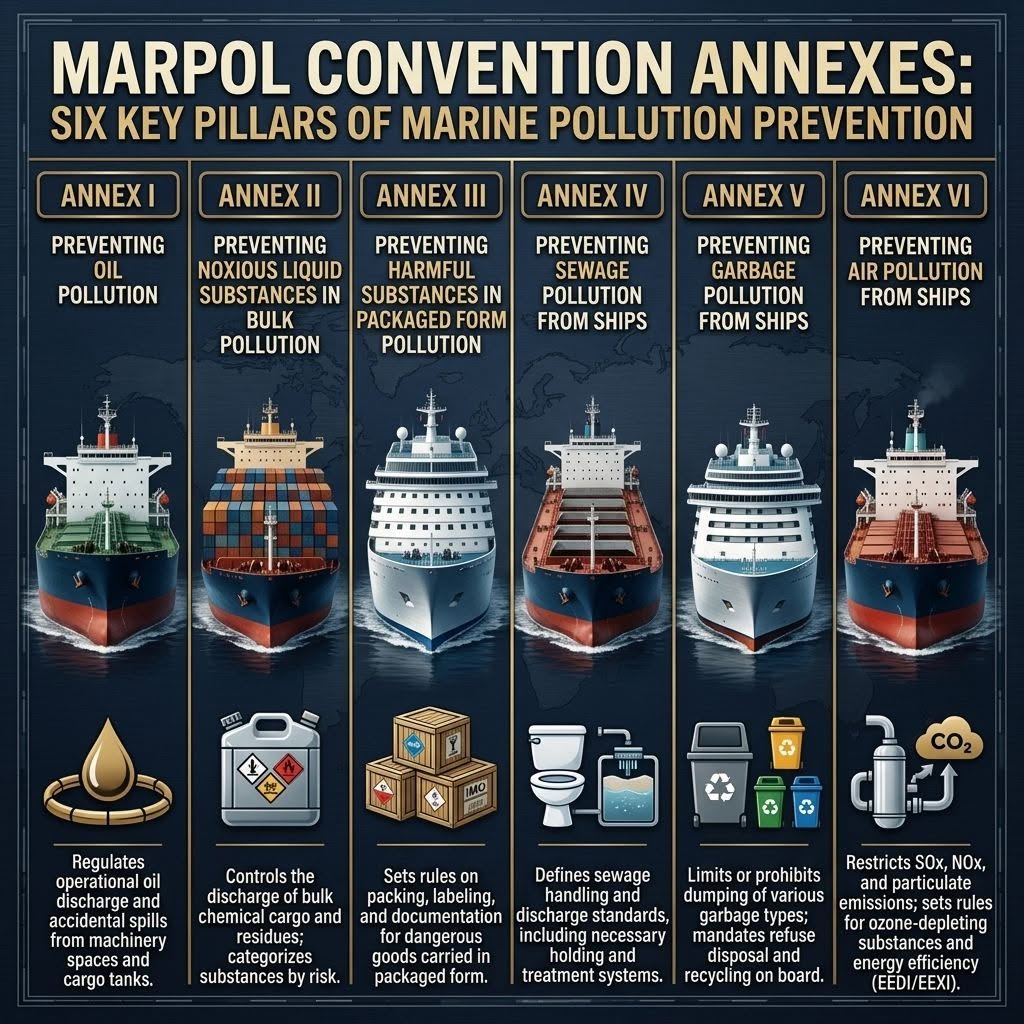
The International Convention for the Prevention of Pollution from Ships, universally known as MARPOL, stands as the bedrock of global maritime environmental regulation, establishing strict controls to eliminate accidental and operational contamination of the marine ecosystem. Developed by the International Maritime Organization (IMO), this comprehensive convention governs shipboard practices across six specialized pillars, alternating between liquid, solid, and atmospheric targets.Annex I addresses the prevention of oil pollution by rigorously regulating operational oil discharges from machinery spaces and cargo tanks, while establishing design mandates like double hulls to mitigate accidental spills. Annex II controls the discharge of bulk chemical cargo and residues, meticulously categorizing noxious liquid substances based on their environmental risk profile. For commercial cargoes shipped in distinct units, Annex III enforces detailed standards on the packing, labeling, and documentation of dangerous goods and harmful substances carried in packaged form, preventing hazardous losses at sea.
The regulatory framework extends directly to daily shipboard waste management and global atmospheric health through equally rigid operational baselines. Annex IV manages the treatment and discharge of shipboard sewage, defining strict geographic limits and effluent standards that necessitate advanced on-board holding tanks and specialized biological treatment systems. Complementing this, Annex V places comprehensive limits or total prohibitions on the dumping of various garbage types into the ocean, establishing strict refuse disposal logging and mandatory recycling procedures on board. Finally, targeting the global carbon footprint and regional air quality, Annex VI severely restricts atmospheric emissions including sulfur oxides (SOx), nitrogen oxides (NOx), and particulate matter, while simultaneously governing the use of ozone-depleting substances. To enforce long-term sustainability across modern propulsion systems, this final annex integrates mandatory energy efficiency indexes, ensuring that merchant vessels optimize fuel performance and support international maritime decarbonization strategies.